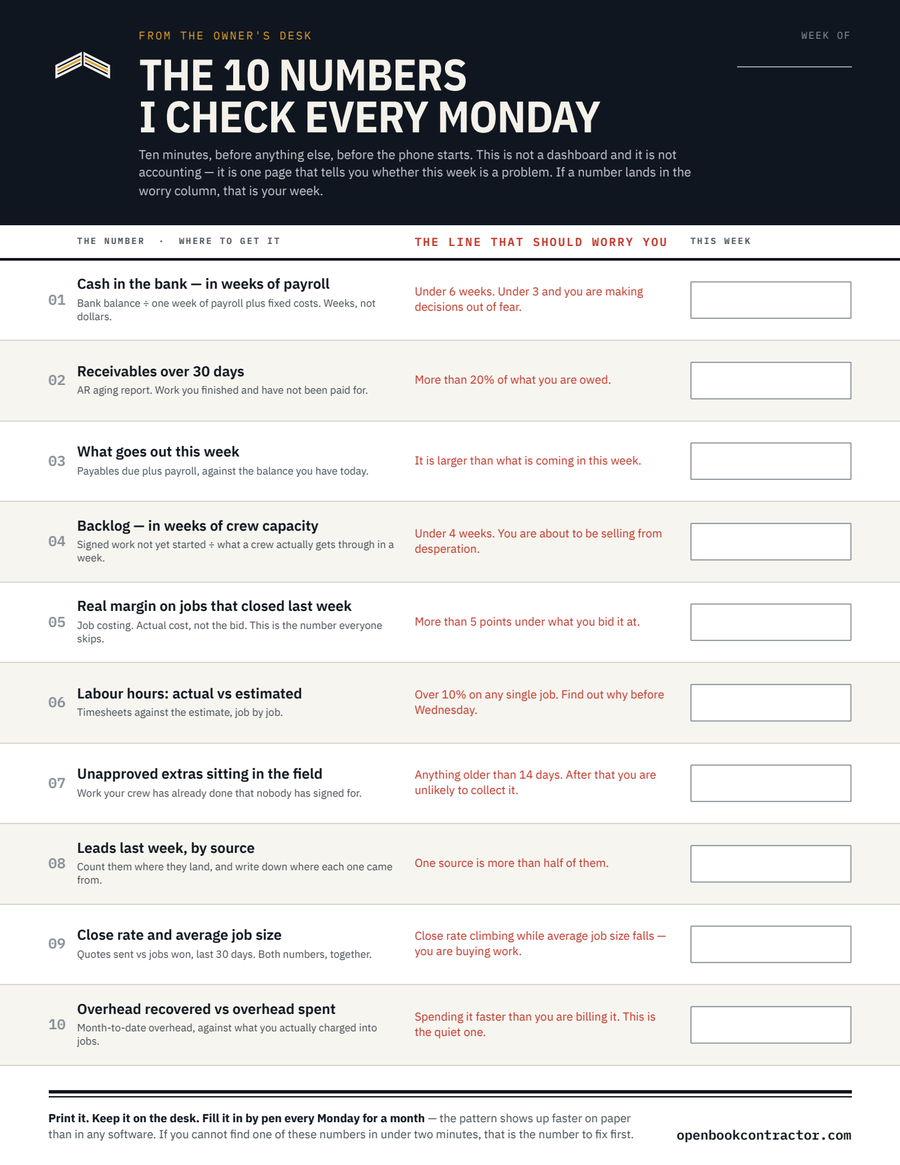
Cash, in weeks of payroll
Not dollars. Weeks. Under six is tight; under three and you start making decisions out of fear.
Real margin on closed jobs
Actual cost, not the bid. More than five points under what you quoted is a pricing problem, not bad luck.
Backlog in weeks of crew
Signed work divided by what a crew actually gets through. Under four weeks and you're about to sell from desperation.
Unapproved extras in the field
Work your crew already did that nobody signed for. Past fourteen days you're unlikely to collect it.
Labour: actual vs estimated
Job by job, against the estimate. Over ten percent on any one job and you want to know why before Wednesday.
Overhead recovered vs spent
What you charged into jobs against what you actually spent. This is the quiet one that eats the year.
Plus receivables over 30 days, what goes out this week, leads by source, and close rate against average job size — with a blank box beside each one so it works as a worksheet, not a handout.